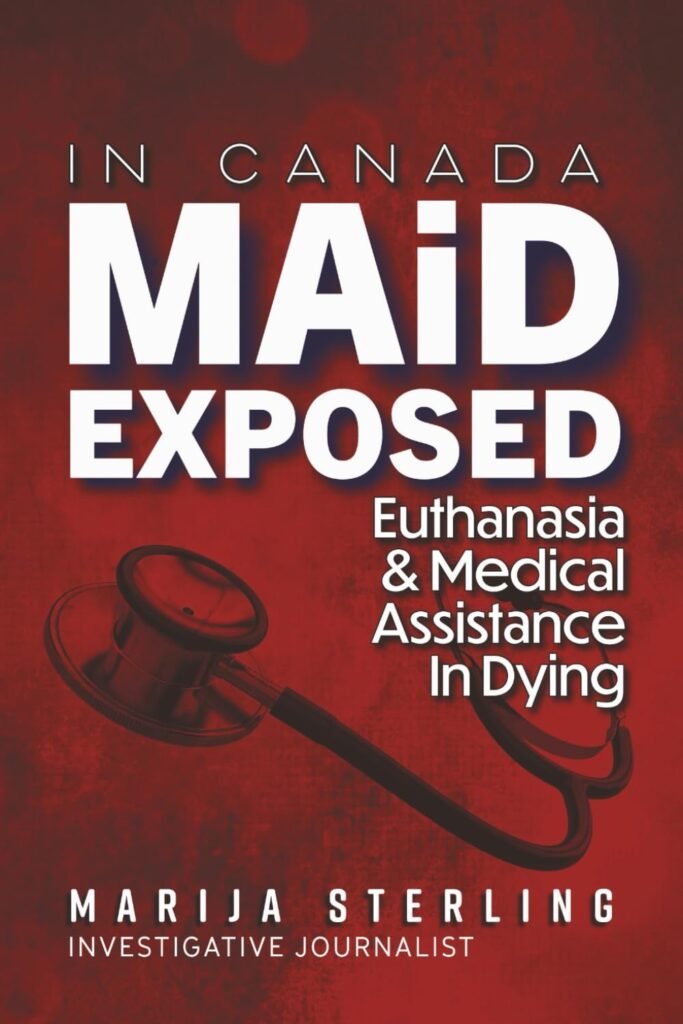
I recently read MAiD in Canada Exposed: Euthanasia, Medical Assistance in Dying, and Suicide—An Investigative Report, published this year by investigative journalist Marija Sterling. The book is the result of several years of research into the structure, expansion, and practical operation of Canada’s Medical Assistance in Dying (MAiD) system.
One chapter, titled “The Armor of Virtue,” examines three words frequently used in discussions about MAiD: dignity, autonomy, and compassion. Sterling argues that these words carry such positive moral meaning that they can sometimes make it difficult to question what is being proposed in their name.
She describes this moral vocabulary as a kind of “armor”—a collection of ideas that can be used not only to defend the MAiD system, but also to portray those who question it as lacking compassion, respecting neither dignity nor personal autonomy.
These are important concerns for anyone who cares about how our society responds to people who are suffering.
What Do We Mean by Dignity?
People sometimes speak of MAiD as a way of preserving dignity. But what do we mean when we say that someone has dignity?
There is an important distinction between inherent dignity and dignity based upon circumstances.
From a Christian perspective, every human being possesses inherent and unconditional worth because we are created in the image of God. Our value does not depend upon our health, independence, productivity, abilities, or perceived quality of life.
A person does not become less valuable because they are elderly, disabled, seriously ill, dependent upon others, or approaching the end of life.
Sterling observes that within the operational context of MAiD, dignity can become associated with “functional independence, self-sufficiency, and perceived quality of life” (p. 37). This raises a serious concern: if dignity becomes dependent upon independence and quality of life, what message does that communicate to those who are dependent upon others?
True dignity should mean that a person’s worth remains intact even in the midst of suffering.
The answer to a person who says, “I no longer feel that my life has dignity,” should not be to suggest that death restores that dignity. It should be to come alongside that person and affirm their worth, offering care, companionship, and support.
Is Autonomy Enough?
Another central argument for MAiD is personal autonomy—the right of an individual to make decisions about their own life and death.
“My life, my death” expresses this idea clearly.
But none of us lives entirely independently of others. Our lives are interconnected. The decisions we make affect spouses, children, parents, friends, caregivers, medical professionals, and the wider community.
MAiD may involve an individual’s decision, but it is not an event that affects only one individual. Others participate, others experience the consequences, and others are left behind.
This raises difficult questions. What effect does it have on healthcare professionals who are asked to participate in intentionally ending a person’s life? What does it mean for families who lose someone to suicide through MAiD? And what happens when death is increasingly presented as an acceptable response to suffering?
There is also an important question about whether a choice is genuinely autonomous when meaningful alternatives are unavailable.
Sterling distinguishes between formal consent and meaningful autonomy. Genuine autonomy requires real alternatives. Those alternatives can include adequate healthcare, effective pain management, stable housing, social support, companionship, and appropriate assistance for those living with disability or dependency (p. 38).
If a person is choosing death because they cannot access the support necessary to continue living, we should ask whether that choice represents genuine freedom—or whether it has become a last resort.
What Does Compassion Require?
Perhaps the most powerful word in this discussion is compassion.
Compassion means responding to suffering with care. Yet Sterling argues that the meaning of compassion can become narrowed when MAiD is presented as a means of eliminating suffering by ending the life of the person who suffers.
This is particularly significant when people seeking MAiD identify circumstances such as poverty, loneliness, inadequate housing, lack of support, or limited access to services as contributing factors. If a person is suffering because they are lonely, should our response be to end their life—or to make sure they are no longer alone?
If a person is suffering because they lack adequate support, should our response be death—or should we work to provide the support they need?
If a person feels that they are a burden, should we confirm that perception—or remind them that their life has value regardless of how much assistance they require?
These questions are at the heart of what it means to care for one another.
When Words Become Barriers
Words such as dignity, autonomy, and compassion are important. We should not abandon them. But neither should we assume that using these words automatically settles the moral questions surrounding MAiD.
When these concepts become closely associated with assisted dying, those who question the system can sometimes be portrayed as opposing dignity, autonomy, or compassion themselves.
But asking questions is not the same as lacking compassion.
We can care deeply about people who are suffering while still asking whether ending a person’s life is the most compassionate response to that suffering.
We can respect personal freedom while asking whether a person’s choices are being made in circumstances where meaningful alternatives are actually available.
And we can affirm human dignity while rejecting the idea that dignity depends upon independence, health, or the absence of suffering.
A Different Response to Suffering
Human suffering should call us toward one another. Pain, loneliness, fear, disability, dependency, and hopelessness are not problems that can simply be solved by ending the life of the person experiencing them.
They call for presence.
They call for care.
They call for companionship.
They call for practical support, appropriate healthcare, and people willing to walk alongside those who are suffering.
This is especially important for those who may feel that their lives have become a burden to others. The Christian response is not to measure their worth by what they can contribute or how independently they can live. Their worth is inherent. It does not disappear when their circumstances change.
At PARASOL, we believe that every human life has value. We believe that people facing difficult and sometimes painful end-of-life circumstances deserve to be heard, supported, and cared for.
The question we should continue to ask is not simply, “How can we end this person’s suffering?”
It is also:
“How can we better care for the person who is suffering?”
That question may require more of us. But perhaps that is precisely what genuine compassion requires.

I love this article. May we always seek to affirm and cherish others as they age.
What a well laid out argument for Truth, for Life. Compassion, understanding, care , love, true alternatives to death.